How to Do The Work (Byron Katie): A Step-by-Step Guide
Some stressful thoughts, once observed, seem to dissolve into fitful laughter and fall silent—sometimes for life. Others just get louder.
The loud ones are often connected to deeper-laid beliefs that, unbeknownst to us, form the cornerstone of our identity. Because observing our thoughts facilitates their transformation (see: quantum theory), they essentially freak out and go on the defensive. This is because one’s “identity” suddenly hangs in balance. Oh no!
Defense mechanisms often take the form of our mind replaying scenes from the past or imagined future related to that thought, or simply thinking the thought over and over again in daily life–while making pancakes, folding the laundry, or doing a grocery run. In our subconscious, they often dictate our reactions and decisions.
This can be tolerable, until life contrives to ensure it’s not—as it has a way of doing.
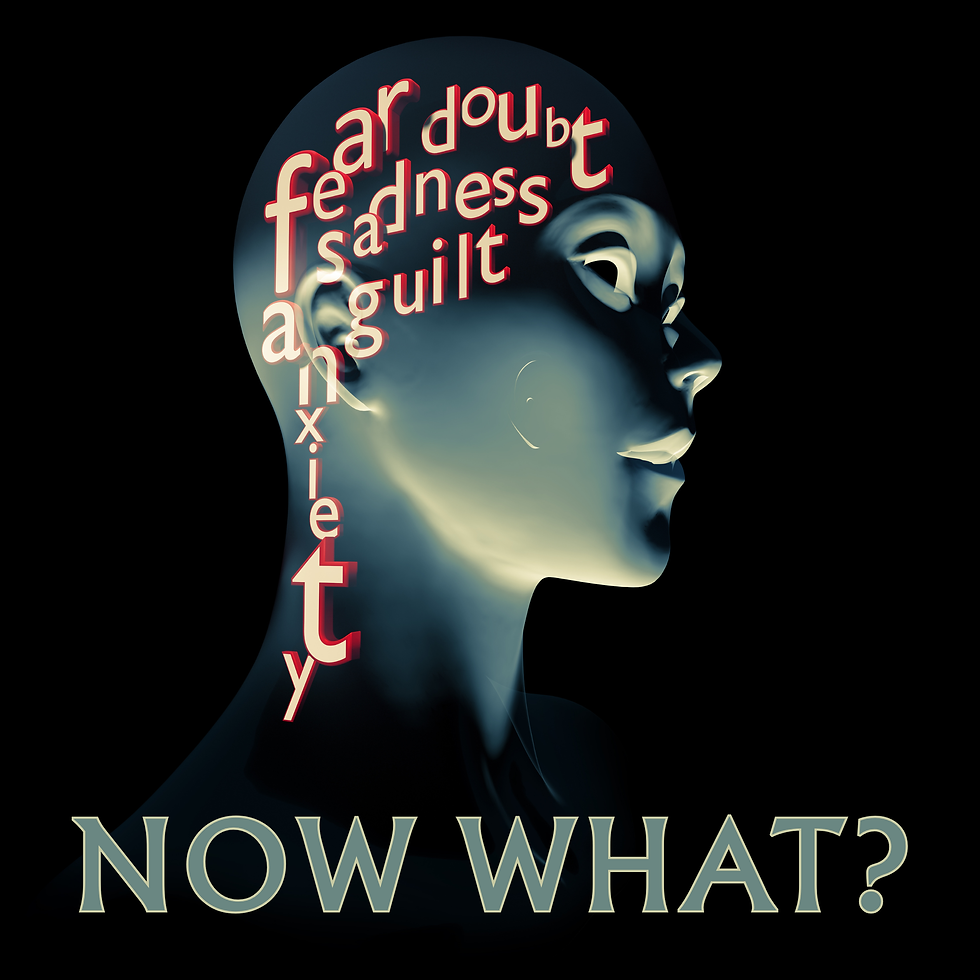
When that happens, the question becomes: now what? In answer to that question, I’m going to show you how to do The Work (Byron Katie) step by step, as requested by one of my readers.
Byron Katie is an American woman who had an enlightenment experience lying on the floor of a halfway house several decades ago. She proceeded to take that experience to the desert, where she spent two years observing the nature of the egoic mind, also known as the voice in your head. Out of that experience came the method she calls “The Work,” whose purpose is to understand our stressful thoughts on the deepest level—at which point they usually cease to be stressful.

She’s concerned with happiness; how to live a happy life. Now in her 80s, she walks ordinary people through the method online several times a week.
The first step of her method is to identify one’s stressful thought and anchor it in a moment of time in which that thought is most triggering. For the purposes of this article, let’s use the thought, “my friend group secretly hates me.”
Byron Katie recommends that if you’re new to this practice, you work with something external to you: a neighbor, a family member, that bad driver you wanted to run over yesterday, whatever. The reason for this is that the constellation of thoughts and beliefs we’ve come to identify ourselves with–otherwise known as the ego, as defined in this context–will feel less threatened when you work with mind material that appears external. In fact, that voice in our head often loves to tell us exactly what another person should or shouldn’t be doing! Amiright?
To start off, we simply write down the stressful thought using this formula: Me + feeling + because = stressful thought. So this could look like:
I am anxious because my friend group secretly hates me.
If you’re unsure what feeling to use, see what you feel “re-living” it in the past, when that thought was even more triggering, also known as an anchor. For this thought, my anchor might be looking at my group chat messages and seeing that no one responded to the last thing I wrote.
Now that I have my original stressful thought, I can either question it right now or hand the microphone over to that anxious voice in my head and let it fill out the rest of the points on Byron Katie’s “Judge your Neighbor” worksheet. Because that worksheet covers a lot more internal ground, it’s the one I’ll be using for this article—just be aware that you don’t always have to use this one. Sometimes, I just take my single stressful thought and apply the questions and turnarounds you’ll see below to it and go on my merry way. Other times, when the situation doesn’t resolve and/or I continue feeling stressed about it, I know I need to go deeper and thus turn to this worksheet.
So after writing down your original stressful thought, let the voice in your head tell you what it wants, based off that stressful thought:
Desires: I want…
I want them to respond to my messages right away, because that means they like me.
Tip: it’s sometimes helpful to add “because that means” if the ego offers up something (“responding to messages”) that really means something else (“they like me”)—as in this case.
I have one desire listed here, but there’s no limit.
Advice: They should or shouldn’t…
They shouldn’t ghost me on Whatsapp.
If they don’t want me in their group anymore, they should just say so.
Happiness: In order for me to be happy, I need [so-and-so] to do or be [such-and-such].
In order for me to be happy in this situation, I need to feel secure in my friend group.
This is a classic example of the egoic mind being as vague as possible so as not to feel too exposed. In these situations, I ask the voice: what specific action would make me feel secure in my friend group?
In order for me to be happy in this situation, I need them to respond immediately and do nice things for me.
What nice things? I ask the anxious voice in my head. You might have to do this quite a bit at first, until the voice in your head realizes that you’re not out to destroy it, but rather to comprehend it. Just like that one shy friend, it starts opening up—because you’r really listening. You really want to know.
In order for me to be happy in this situation, I need them to respond immediately and remember to ask about important things in my life.

Great. Next, judgments:
They secretly want to kick me out of the group.
They’re annoyed by my mere existence.
They’re lying to me.
The last line often circles back to the first and has a specific format: I never want to experience + triggering thing again.
I never want to feel like my friend group hates me again.
Now that we’ve listened to what the voice in our head has to say about the matter, it’s time to put some sweatpants on, get comfortable, and settle in for however long it takes to find our own truth in all this.
We have a lot of mind-content we’ve never thoughtfully examined before, and rather a lot of that determines what we call “reality.” So this is a powerful practice, and it operates on multiple levels—you might do a worksheet on your Mom and it shifts your energy with your neighbor, for example.
Because it is so powerful—I think of it as “surgery” for the mind—it requires energy, it requires stillness, it requires dedication, it requires precision, and above all, it requires honesty.

So, taking each thought at a time, we’re going to get still and apply some questions to it. In practice, here’s what that looks like:
First, I settle into my anchor: that moment in the past or imagined future that “carries” the stressful thought and triggers me. Closing my eyes, I feel my hands on my phone as I check my phone for the 15th million time to see if any of my friends responded to my last message in our group chat, and I observe the anxiety build as I see no one has written anything. My heart sinks, and I think:
I am anxious because my friend group secretly hates me.
Is it true? I’m asking the part of me that can observe the thought. The anxious mind-voice will probably jump right in with comments like, yeah, it’s totally true, remember when…and proceed to present its case, like a lawyer. There will be evidence; there will be “proof.” Hear it all and then come back to you, the observer. Is that really true? A very still and penetrating mind might ask: can I really know if another person hates me?
Do I have absolute certainty it’s true? This is simply a more comprehensive way of asking the first question, but it’s helpful because it can really put things in context. Can I really know this? Based on what—and is that evidence real, or the product of assumption and imagination? The answer yes is equal to the answer no. This isn’t about responding as the person we think we should be, but as the person we actually are. In the deepest part of who I am, is this true for me? Yes or no? I often spend a while here, going deeper and deeper until I feel like I’ve hit my truth.
How do I react, what happens, when I think it’s true? Now, this one can be uncomfortable, so do your best not to rush it because, with patience, this process offers up valuable information. The question invites me to “revisit” that triggering moment in my mind’s eye for two purposes: 1) this is my chance to simply let myself feel any leftover energy (pain, frustration) “trapped” in that moment, without “becoming it”—I am watching all this. It’s an opportunity to release stored energy. Depending on the situation, you may well sit here for 20 minutes crying or feeling waves of rage move through you. That’s okay! 2) This is my opportunity to set a “somatic alarm clock” that will alert me rapidly when or if I fall into identifying with this stressful thought again. I think of it as putting “anxious me” under a microscope and noticing how my breathing changes when I’m checking my phone with this thought, noticing my jaw clench, noticing my mind playing imaginary movies of my friends making fun of me behind my back, noticing my palms getting sweaty, noticing how I start to share less and less in the group because my mind offers up movies of them making faces whenever my messages come through. Noticing.
Who would I be without this thought? This one can draw a blank at first, so if you already have a meditation practice, this is the moment to plug into that. By that I mean, this question requires intense stillness and dedication because you’re essentially starting a new neural network. This is neuroplasticity in action–remember how concentrated you have to be the first time you learn something new? This requires that energy. In practice, it’s an invitation to experience yourself in that triggering moment without the thought.
So I’m holding my phone, I’m swiping to my group chat with my friends, but I don’t have the thought that they all secretly hate me. I see my message sitting there with no responses yet, and I draw no conclusions. I’m just there, observing instead of interpreting. I notice what it’s like, without changing anything that happened, without that thought. I notice my breathing, my nervous system. For deeply ingrained thoughts and beliefs, this can be a very difficult place to access. I often take recourse in anchoring in myself as a small child, or even a baby—moments before certain beliefs took root. This is especially the case for deeply-laid ego-societal beliefs like pretty and ugly, right and wrong, fat and thin, smart and dumb. These polarized concepts take root early on—beyond them, there’s a vast field of freedom and peace.
Turnarounds: what are they? Turnarounds take the original thought and turn it inside-out in as many ways as possible. There are three starting points: 1) the strict opposite (this usually involves adding “no”); 2) switching the subject (“I”) with the object or indirect object (“he/she/they/it”); 3) turning the entire thought toward me. In practice, here’s what that looks like:
I’m not anxious because my friend group secretly hates me.
We can also look at the opposite word for anxious, perhaps in this case calm:
I’m calm because my friend group secretly hates me.
I always take a moment to “try these on”—as if they were a new set of clothes. How do they fit? Do they feel more “me”? This practice is not about replacing negative beliefs with positive beliefs. It’s about understanding that stressful thoughts exist on a polarity, and for our minds to return to balance, we need visit and understand the other polarity. Thus, turnarounds are not to be blindly believed in a “my doctor told me so” manner. They’re to be tried on, tested, and learned from. They often have a lot of truth to them.
My friend group is anxious that I secretly hate them.
See how we switched subject-object there? I might notice how my paranoid behavior with them could well create paranoia for them, too.
I’m anxious because I secretly hate me.
A softer way of saying the same thing is:
I’m anxious because my thoughts about me secretly hate me.
Using “my thoughts about x” instead of “me” can be easier to swallow and often quite revealing. These three are not the only options–this is an incredibly creative process that can be fun to do with a group of trusted people. How many different ways are there of flipping this thought? One begins to realize it’s a Rubik’s Cube.

And there you have it, friends. If you apply this process to every thought on your worksheet, you are not only creating new neural networks, you’re storing information about what happens to your body and emotions when you interpret reality in a determined manner. This observation is in and of itself freeing.
Once the method has been explained, a common reaction is: what drudgery! This would take forever! I literally have thousands of stressful thoughts! I don’t have time for this.
Well, the reality is, it took energy to create the neural networks you have now, so it’s going to take energy to dissolve them and create new ones—energy that can give you a new life. Especially if you do the “Judge Your Neighbor” worksheets, a set of stressful thoughts is often linked—like the roots of trees underground—to a whole matrix of other, seemingly unrelated thoughts. When you work one set, you shift many more. Things are not quite as they appear.
My advice is: try it. It might not be for you, but you won’t know until you try.
Or if you have done this method, I would love to hear your experience.
Of if you’d like to experience this method musically, I composed and sang a song about it called Know Thyself, which you can listen to here.

Open to answering any questions if I left anything unclear!


Comments